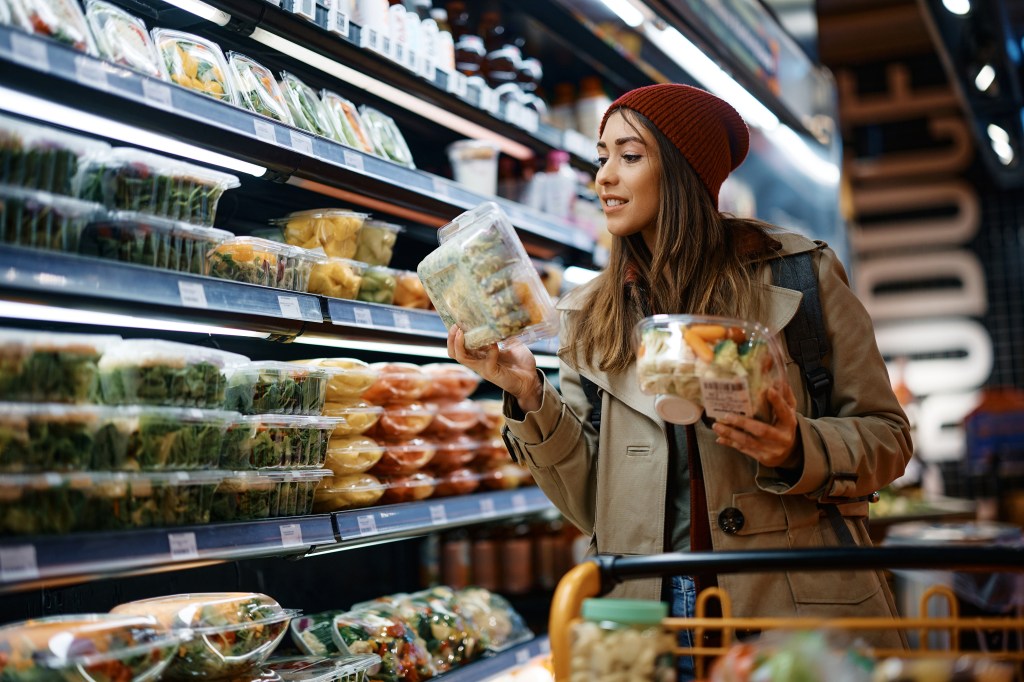
Shopping healthy is hard — and food labels don’t make it any easier. ‘Low fat pudding dessert’, ‘light cheese’, ‘lean beef mince’, ‘Coke Zero’, ‘low sugar granola’… These sound healthy, right? But are they?
Walk through any supermarket and you’re hit with health claims on almost every package. Food companies know exactly which words make you feel like you’re making a good choice — even if the product isn’t actually that nutritious. In this article, I’ll share three simple tips to help you cut through the marketing buzzwords and decode food labels with confidence. So next time you’re shopping, you decide what’s healthy — not the packaging.
Tip 1: Don’t trust the pretty front — the real story is on the back
The front of a package is like a little billboard. It’s designed to catch your eye and make you feel good about putting the product in your basket.
Words like:
- “high in protein”
- “low fat”
- “no added sugar”
- “natural”
…may sound great — but they often hide what’s actually inside.
Flip the product over and check two key sections:
- Ingredients list (What’s in it?)
- Nutrition table (How many calories does the product have and how much sugar, fat, salt, fibre, etc.)
Example:
A “low-fat strawberry pudding dessert” might sound healthy until you look at the label and see it contains 4 teaspoons of added sugar per portion. Not so great.
Tip 2: Fewer ingredients are usually better
Long ingredient lists can be a sign of ultra-processed food. That’s because manufacturers often add thickeners, stabilisers, colourings, or artificial sweeteners to mimic the texture and taste of whole foods.
A good rule of thumb? If you don’t recognise half of the ingredients — or wouldn’t cook with them yourself — it might not be the most nourishing choice.
Example:
A homemade pesto might have: fresh basil, olive oil, pine nuts, parmesan, garlic, salt.
A store-bought version might have: basil (54%), sunflower oil, cashew nut flour, glucose syrup, grana padano cheese (5%), preservative, cashew nuts (4%), pecorino romano cheese (2%), pine nuts (1%), salt, acidity regulator, extra virgin olive oil, antioxidant, garlic powder.
Additives aren’t automatically a bad thing — many serve a purpose, like keeping food safe or shelf-stable. But when a simple recipe suddenly includes a dozen extra ingredients, it’s worth asking why — and whether you really need them.
Tip 3: Read carefully — order and portion sizes matter
The ingredients list is always ordered by weight — so the first ingredient is what the product contains the most of.
If sugar is in the top three? That could be a red flag (especially in a product where you wouldn’t normally expect any sugar — see the pesto example above). Even if it’s not listed as “sugar,” it can still show up under other names like: glucose syrup, fructose, dextrose, fruit juice concentrate, or rice syrup.
Also check the portion size on the nutrition table. Many products use unrealistically small servings to make the numbers look better.
Example:
A cereal box might say it contains 6.6g of sugar per serving. Sounds okay — until you realise one serving is just 30g. That’s only a few spoonfuls. A standard bowl might be double or even triple that — and suddenly you’re looking at over 10g of sugar.
(For context: the NHS recommends that adults should have no more than 30g of “free sugars” per day.)
Final thoughts
Nutrition labels can be confusing — and that’s no accident. The food industry knows how to market their products cleverly. But once you learn to spot the red flags and trust your own judgment, shopping becomes easier. And more empowering. Remember: the goal isn’t to obsess over every gram. It’s to feel more in control, more informed — and less overwhelmed.
 Stay curious!
Leave a comment